
This Private Practice Was My Last Attempt to Stay in the Mental Health Field
(burnout, over-functioning, and building a life that my nervous system doesn't need to escape from)
Prefer to watch or listen instead of read?
Two years ago, upon leaving my agency job, I told myself that I would give private practice two years.
And if after two years I wasn't feeling healthier, happier, and more whole, I would find something else to do with my life.
Full stop.
This practice was my last attempt to stay in the mental health field.
Because six years of working in community mental health had done a number on me.
I was treating a high volume of clients with severe and persistent mental illness with limited professional support. Like many therapists and social workers, I cared deeply about the people I served. But over time, the pace, the pressure, the emotional labor, the moral injury, and the systemic demands of the work started to feel less like meaningful sacrifice and more like Walt Whitman's warning to "dismiss whatever insults your own soul."
The work was insulting my soul.
The work required my nervous system to be constantly "on."
Alert.
Vigilant.
On call.
Ready to call 911.
Ready to call security.
Ready to physically defend myself.
Ready for someone's release from jail.
Ready for a client's withdrawal from meth.
The work was unsustainable.
And for a long time, I thought the problem was me.
I thought there must be a way to become better at tolerating it.
Push harder.
Optimize better.
Become more disciplined.
Become more efficient.
Practice better “self-care” so I could continue enduring what was hurting me.
But eventually I started wondering:
What if the problem wasn't my difficulty tolerating the workload?
What if the workload itself was incompatible with long-term human wellbeing?
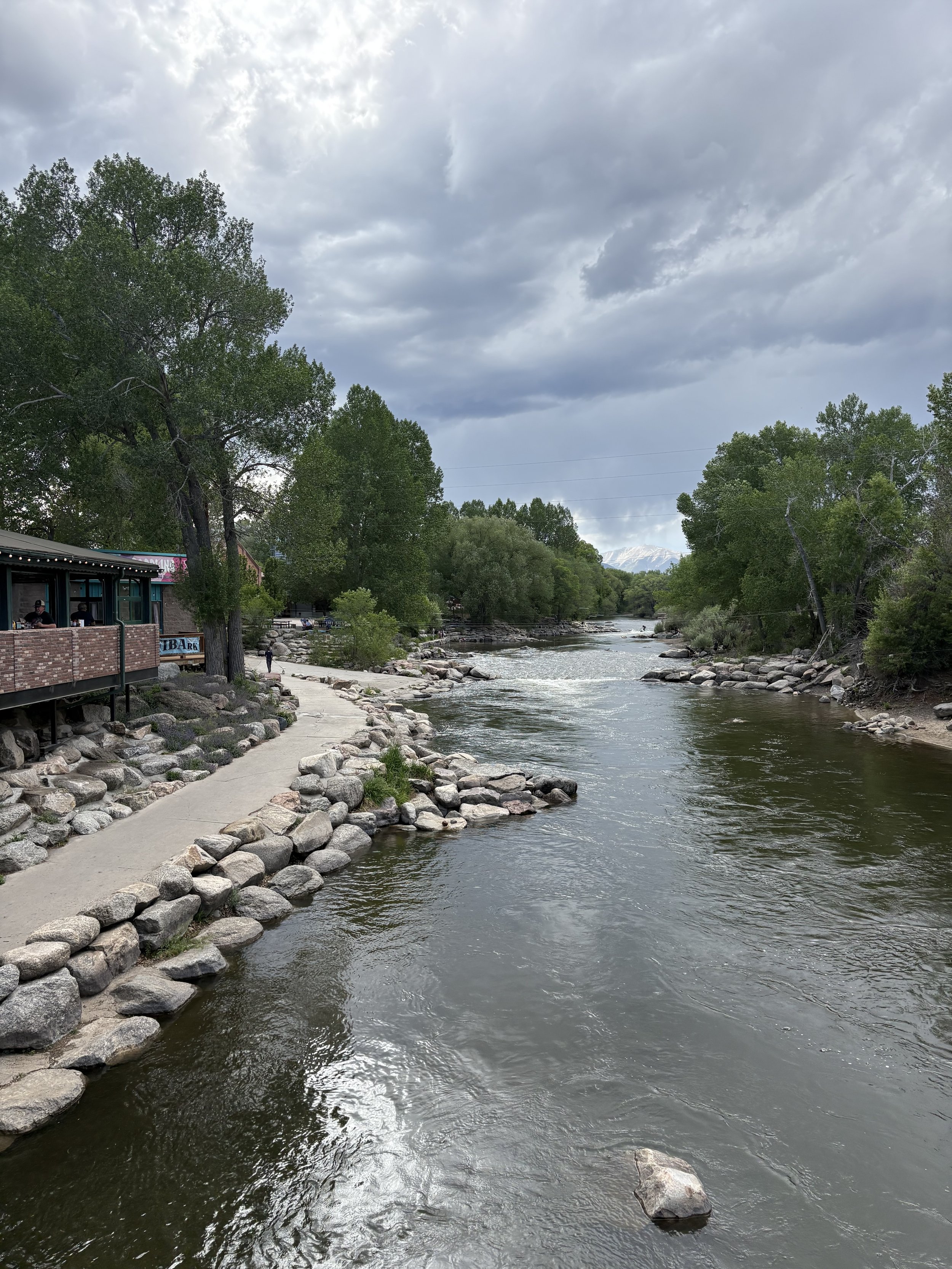
When Your Body Starts Revolting Against Your Life
There's a concept in health psychology called allostatic load, which describes the cumulative wear and tear that chronic stress places on the body over time. In trauma therapy, we often talk about a window of tolerance the zone where our nervous systems can function effectively without becoming chronically overwhelmed or shut down.
Different fields use different language, but increasingly, I think they're all pointing toward something profoundly important:
Human beings seem to have an individual range of sustainable emotional, cognitive, and relational output.
A kind of psychological carrying capacity.
Not a fixed number.
Not a personal failing.
Not something to judge.
Just a reality worth understanding.
Humans aren't machines.
Humans are ecosystems.
What If the Problem Isn't Your Lack of Discipline?
There's a well-established theory in weight management—set point weight—that suggests that the body has a preferred weight range that it actively defends over time. No matter how many diets. No matter how much exercise. Your body wants to be a certain weight.
The more I've learned about burnout, overwhelm, and nervous system functioning, the more I've wondered if something similar may be true psychologically.
What if many of us have spent years trying to force ourselves beyond our natural carrying capacity?
What if the goal isn't becoming a person who can tolerate more and more?
What if the goal is building a life that allows us to thrive?
Healthy ecosystems require cycles.
Growth and rest.
Activity and recovery.
Expansion and contraction.
Here in Colorado, no one expects perpetual summer.
The mountains need winter.
The soil needs replenishment.
Fields sometimes need to lie fallow.
Healthy land cannot be harvested endlessly without consequences.
And neither can human beings.

Psychological Carrying Capacity
Many high-achieving women have been taught to measure themselves by how much they can carry.
How much they can produce.
How much they can tolerate.
How much they can give.
But capacity isn't simply about what we can do.
It's about what our nervous systems can sustainably metabolize without requiring costly recovery afterward.
Therapy work is deeply meaningful to me, but it is also metabolically expensive work. It requires sustained emotional attunement, executive functioning, empathy, presence, and relational engagement for hours at a time.
And honestly, many women are doing similar work whether or not they're therapists.
Reading the room.
Managing tension.
Anticipating needs.
Keeping the peace.
Absorbing stress.
Providing emotional care for everyone around them.
It's exhausting work and it's largely invisible.
I Could Keep Functioning, But I Wasn't Well
For a long time, I lived in this gap:
I was functioning—but I wasn't well.
And I started noticing something important.
When we chronically exceed our psychological carrying capacity, the system eventually fights back.
Not because we're weak.
Because living systems seek balance.
The nervous system will continue pushing toward equilibrium whether we cooperate with it or not. And that's often when people begin experiencing what we often call burnout:
Exhaustion.
Numbing.
Resentment.
Difficulty focusing.
Loss of motivation.
A growing urge to withdraw from responsibilities that once felt manageable.
And something has to give.
The paradox is that chronic override often reduces functioning over time. People become less resilient, less creative, less emotionally available, and more dependent on compensatory copinh behaviors as the nervous system reallocates energy toward protection instead of growth.
Building a Life My Nervous System Actually Likes
Over the last two years, I've slowly stopped asking how much I can force myself to tolerate.
And started asking what conditions help me thrive.
That shift changed everything.
I've built a private practice—and a life—that my nervous system no longer has to fight me on.
I am selective about the type of clients I work with.
I've found my ideal number of sessions in a day and I stick to it.
I take breaks.
I spend more time outside.
I nap.
I move my body.
I say “no”.
Often.
As I write this, I'm on a solo van getaway in the Colorado mountains for what I'm jokingly calling a "staff appreciation retreat." Ya know, to show my appreciation to the sole employee of this enterprise!
I'm breathing deeply.
Reflecting.
Listening.
Making small adjustments that support my wellbeing instead of eroding it.

And it is no small thing to be able to say this honestly:
I love my work.
I feel incredibly lucky to do what I do.
Not because I became tougher.
Not because I learned how to handle more.
Not because I optimized myself into becoming a more efficient machine.
In fact, I spent a long time grieving the fact that my personal expectations for myself and my nervous system didn't seem to be in agreement.
I was super annoyed that my body needed so much sleep.
I was endlessly frustrated that I wasn’t more extroverted and had limited social energy.
I wanted to accomplish more than my nervous system could healthfully support.
I wanted certain goals more than I wanted to acknowledge my limits.
That grief was real.
But on the other side of it, I found something better:
I stopped organizing my life around chronic override.
And in doing so, I fell back in love with my professional work.
It breaks my heart to think about how close I came to walking away from the most meaningful work of my life, thus far. I’m so glad that I didn’t.

Burnout Isn't About Personal Failure
Burnout is not weakness.
Many of us are operating inside systems fundamentally misaligned with what human nervous systems actually require. Particularly women.
We live in cultures that reward self-abandonment, endless emotional labor, caregiving without restoration, and productivity at all costs.
We're praised for overriding ourselves.
Until one day, we can't.
Maybe rest, spaciousness, boundaries, and sustainable living aren't indulgences.
As Tricia Hersey, of the Nap Ministry, says: “rest is resistance.”
Maybe caring for ourselves is not laziness.
Maybe it's stewardship.
Your nervous system wasn't designed for perpetual production.
She was designed for rhythm.
For seasons.
For renewal.
Here's to Sustainability and Thriving
As I celebrate two years in private practice, I feel proud not only that my business survived, but that I survived alongside it.
I didn't just build a career.
I built a life that feels inhabitable.
Sustainable.
Durable.
And joyful.
And honestly, for the first time in a long time, I'm excited to keep going.
Onward.
I am a trauma and EMDR therapist in Colorado who works with high-achieving, over-functioning women navigating burnout, overwhelm, trauma, and chronic self-pressure. If any of this resonates and feels like the kind of work you'd like to explore, let’s talk.
I offer private-pay, EMDR therapy for women across Colorado.
And I offer private-pay, EMDR intensives for folks who are looking to make substantial progress more quickly.
You can learn more about my Colorado psychotherapy practice and EMDR intensives by clicking the links.
